


High-volume B2B shipping doesn’t slow down because of major failures. It slows down because of small, repeat issues that repeat hundreds of times a day. Shipping labels are one of those details most teams don’t think about until something goes wrong.
In fast-moving warehouses, shipping labels are scanned, handled, rubbed against conveyors, wrapped under stretch film, and exposed to temperature changes. When labels smudge, peel, or scan inconsistently, the impact isn’t minor. It leads to rescanning, relabeling, delayed dispatches, and avoidable labor costs. Choosing the right shipping labels, return mailing labels, and carton labels becomes a workflow decision, not a stationery one.
What are Shipping Labels
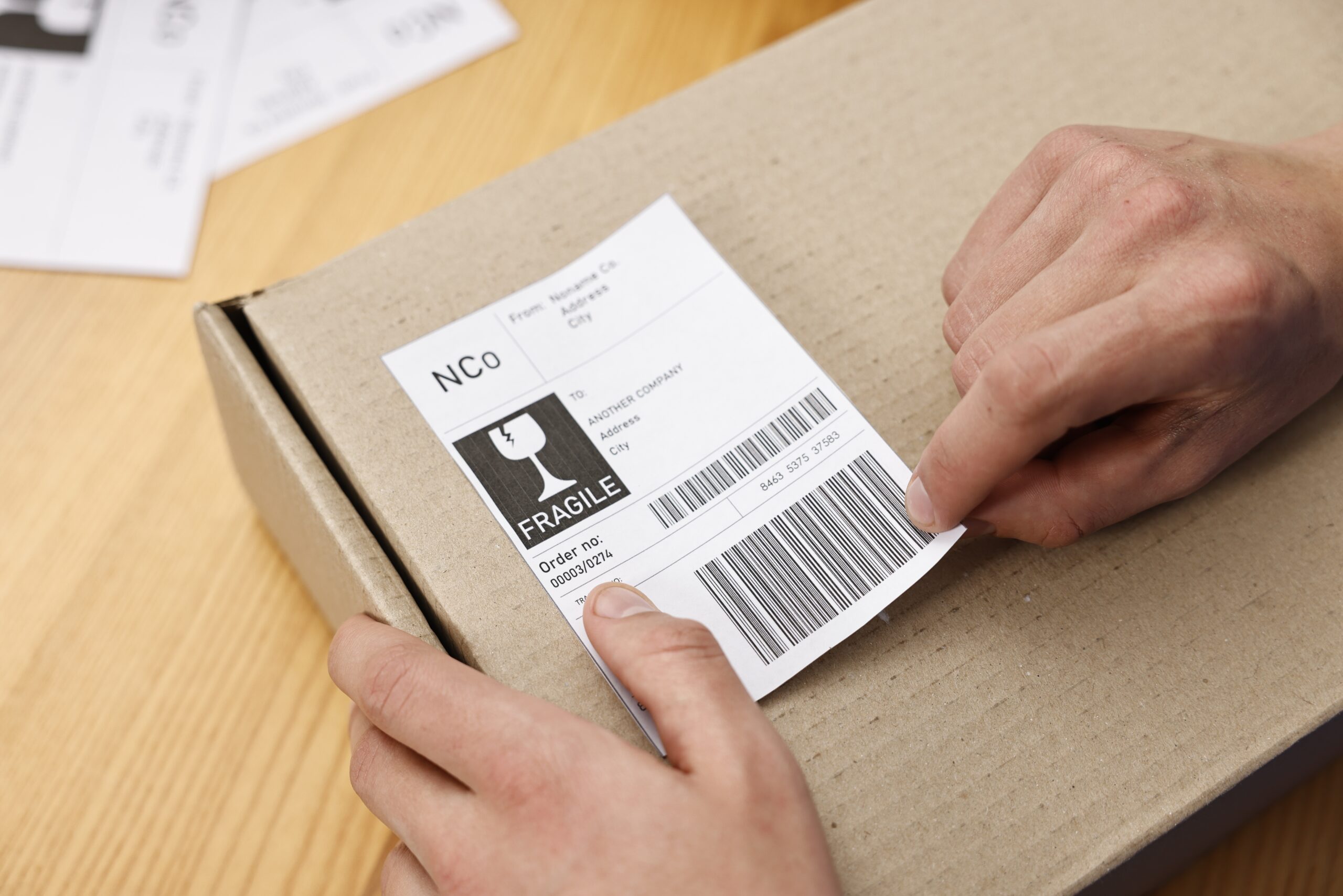
Shipping labels are tags or stickers that are attached to parcels or packages. They contain important information like:
- Barcodes
- Sender’s Address
- Recipients’ Address
These labels often come in different materials, designs, and sizes. Understanding the right shipping label for your operations is highly important and can affect the efficiency of your operations.
How to Select the Right Shipping Label for Your B2B Operations
Choosing the right label plays a significant role in your business. Here are a few points to consider before deciding which label actually works for your operations.
1. Understanding How the Shipping Environment Works
Each warehouse or distribution line presents unique challenges, with labels responding differently based on their exposure. Shipments that pass through cold storage often cause moisture buildup. Trucks parked outdoors expose cartons to heat. Machines and belts create friction on the surface of boxes. Even the stretch wrap used on pallets can press or rub against label faces.
When labels fail, they usually fail for reasons related to these conditions, not because of printer mistakes. A high-volume B2B setup should start by mapping the journey a box takes from the printing station to final delivery. Understanding this makes choosing a label material easier.
In high-volume facilities, labels are rarely touched more than once. A single carton may pass through multiple scan points before leaving the warehouse. Each scan failure adds seconds, and at scale, seconds turn into hours. Understanding the full movement of cartons helps determine whether standard shipping labels are enough or if more durable materials are required.
2. How Paper and Synthetic Labels React When the Movement of Boxes Starts
The printer will not actually show the various aspects that distinguish paper labels from their synthetic counterparts are perfect on all grounds when they are new. When new, paper labels have a perfect appearance in all respects. The true evaluation occurs after the cartons have been moved and are likely in transit. Cheaper and sufficiently good for simple indoor setups, paper labels still occupy a large portion of the market.
Paper labels are used in clean, dry warehouses with stable temperatures that don’t cause them much trouble. They are the most common among carton or return mailing labels because of their good adhesion, clear printing, and excellent performance on regular cardboard.
With the shifts in conditions, the situation alters. Paper becomes soft in humid conditions. Even the slightest increase in humidity will be enough for the edges to start lifting. Sunlight hastens the fading of the print more than one would expect.
Many B2B operations start with paper shipping labels because they work well for controlled indoor environments and offer cost efficiency at scale. They are commonly used for carton labels and return mailing labels where cartons move quickly from packing to outbound trucks.
Synthetic labels become essential when shipments face friction, moisture, or longer transit cycles. Operations handling palletized freight, outdoor loading bays, or stretch-wrapped cartons often shift to synthetic materials to avoid barcode damage and peeling during transport.
3. Why Adhesive Strength Turns Out to Be More Important Than Most People Think
A label may be printed with perfection, but the adhesive is the one that determines if it can stay or not.
Permanent adhesive works for most B2B shipments. It grabs onto cardboard, shrink wrap, and even pallet wood without much effort. That’s why it’s the go-to option in most facilities. Removable adhesive is more of a temporary solution. It’s helpful for short-term sorting or internal labeling jobs where the label needs to be taken off later without damaging the surface.
Freezer or industrial adhesive plays a different role. Supply chains that deal with chilled items, pharmaceuticals, chemicals, or products that move through temperature changes rely heavily on this type. Regular adhesive becomes unreliable when cartons build condensation after coming out of cold storage. Freezer-grade adhesive doesn’t break down in this situation; it stays fixed even when the surface gets damp or cold.
Inconsistent adhesive performance is one of the most common reasons labels fail during transit. Labels that detach midway through shipping often require manual correction downstream. High-volume operations usually standardize permanent or freezer-grade adhesive to avoid relabeling during peak dispatch hours.
4. Label Size Affects Workflow More Than Aesthetics
A label that’s too small might not hold all the necessary information. A label that’s too large can wrinkle, fold, or overlap seams on a carton. In busy environments, picking the right size helps the team move faster.
The most common size is 4×6 inches for shipping labels, but this isn’t a universal rule. Pallets often need larger labels so they’re easier to scan from a distance. Small return mailing labels can be printed in batches on A4 or letter-size sheets. Internal warehouse labels might need smaller formats for shelf bins or product IDs.
The main goal is consistency. When teams switch between too many label sizes, mistakes creep in. A steady size keeps the printing workflow smooth and predictable.
5. Printer Type Quietly Shapes the Label Choice
Direct thermal printers are fast and don’t require ribbons, which makes them ideal for large daily printing volumes. But direct thermal prints fade over time and react to heat. For shipments delivered quickly, they’re fine. For long-term storage or multi-step supply chains, they become unreliable.
Thermal transfer printing produces durable prints that resist heat, sunlight, and friction. The labels last longer, which makes them better for high-volume B2B operations where cartons may sit in storage racks for weeks before reaching the end user.
Matching label material with printer type prevents downtime from jams, poor print quality, or repeated test prints.
6. Consider Client and Industry Labeling Requirements
Many B2B buyers have strict labeling instructions. Some require GS1-compliant barcodes. Others need SKU, batch number, and PO printed in specific positions. Return mailing labels might need to be included inside the carton for easy processing during returns.
Ignoring these requirements often leads to rejected shipments, something that disrupts daily operations significantly. Choosing labels with enough surface area and print clarity ensures compliance without last-minute adjustments.
7. Testing Labels in Real Conditions Before Bulk Orders
Before committing to thousands of rolls, it helps to run small tests in actual conditions. Cartons with test labels can be pushed through the conveyor system, stored in different temperature areas, wrapped with stretch film, and scanned repeatedly. Real handling exposes flaws that brochures can’t show.
Such testing prevents unnecessary adjustments later. High-volume lines depend heavily on reliability, and a label that behaves consistently removes friction from the routine.
Ordering Shipping Labels for Scale: What B2B Teams Often Miss
Material selection is not always responsible for the problems concerning labels. A frequent reason is order inconsistency. There are cases when roll lengths, core sizes, or label formats are changed and consequently, the printing workflows are affected, particularly when multiple shifts are using the same setup.
Usually, high-volume teams operate with the same shipping labels of common sizes, like 4×6 inches, which are provided on continuous rolls for thermal printers. Return mailing labels are mostly printed on sheets to ease the process of putting them inside cartons. Keeping these specifications during reordering saves time and prevents the need for last-minute changes that might occur in a busy shipping period.
Final Thoughts
Shipping labels, although they are not very noticeable, still play a very important role in B2B operations with a high volume of deliveries. They facilitate the tracking of goods, keep the stock levels accurate, and allow the supply chain to operate with no delays. The most appropriate label is not necessarily the one that costs the most, but the one that can cope with the warehouse conditions, printing technique, and customer requirements without needing extra assistance.
By choosing shipping labels, return mailing labels, and carton labels based on real-world working conditions rather than assumptions, operations flow smoother and mistakes reduce naturally.